
Mattress Comparison: Hybrid vs Foam vs Spring vs Latex
Key Takeaways
- Hybrid, foam, spring and latex describe support and comfort systems, not firmness or durability grades.
- Foam density, ILD, spring count, wire gauge and layer thickness are specification variables that must be confirmed per project.
- CertiPUR-US applies to qualifying flexible polyurethane foam, not automatically to the entire mattress.
- Packaging format such as roll-pack must be confirmed with the factory for each construction.
- A mattress comparison should lead to a written specification and sample approval, not a category label.
A mattress comparison for B2B buyers is not a ranking exercise; it is a construction audit. Hybrid, foam, spring and latex describe different support and comfort systems, and each carries its own specification variables, documentation requirements and program fit. The right comparison separates what a material is from what a supplier claims it does.
What each construction term actually means
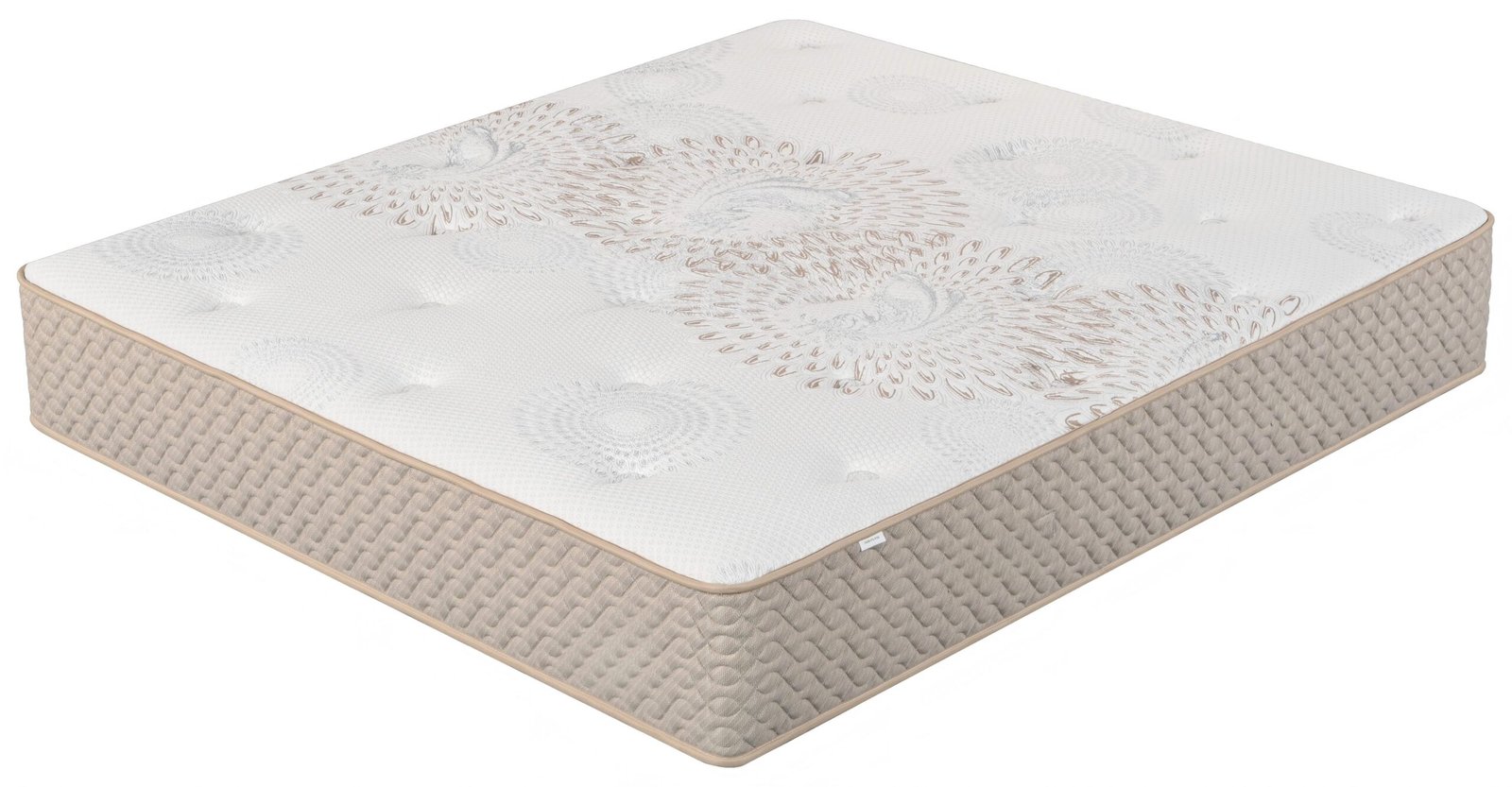
Hybrid describes a mattress that combines a spring support core with foam or latex comfort layers. The term is structural, not a performance grade. A hybrid can be built around pocket springs, Bonnell springs or other innerspring units, and the comfort layers may be polyurethane foam, memory foam, latex or a combination.
Foam construction uses flexible polyurethane foam, memory foam or specialty foams as the support and comfort system, without a spring unit. Foam mattresses can be built as a single block, as layered cores, or as high-resilience foam cores with softer top layers.
Spring construction relies on an innerspring unit as the primary support element, usually covered with foam or fiber comfort layers. Bonnell springs, pocket springs and continuous coils are different spring architectures, not different firmness levels.
Latex construction uses natural or synthetic latex, or a blend, as a comfort layer or as the full core. Latex may appear in hybrid builds as a top layer over springs, or in all-latex builds.
None of these terms specifies firmness, thickness, density, spring count or durability. Those are project-level decisions that belong in a specification sheet, not in a category name.
Where each construction sits in a mattress and what it does
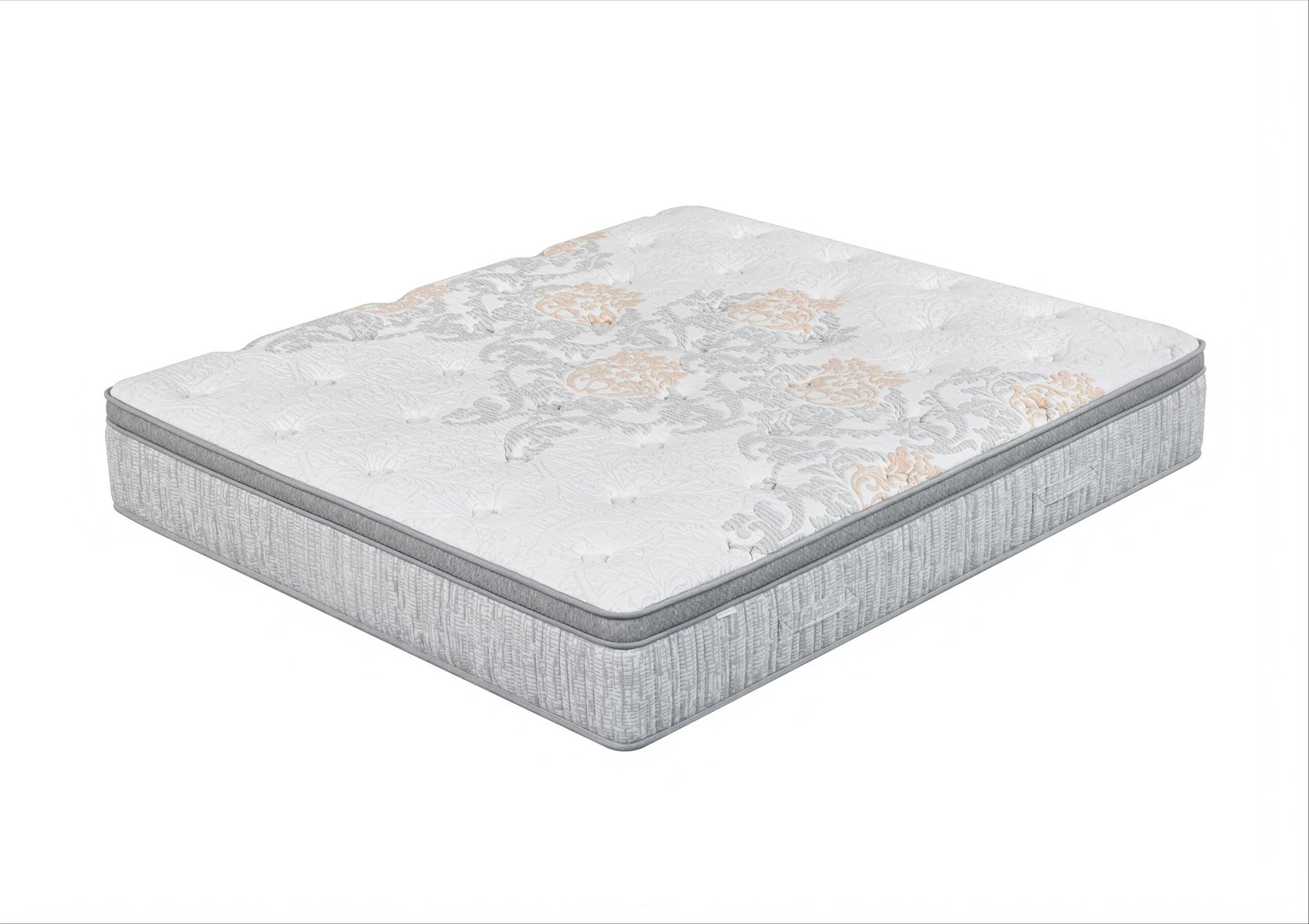
In a hybrid, the spring unit provides the support structure and the foam or latex layers provide comfort and surface feel. The interaction between the two determines how the mattress responds to load, how it isolates motion and how it feels at the surface. Hybrid construction is common in programs that want a spring-based support story with a foam or latex comfort story.
In a foam mattress, the core carries the load and the top layers shape the surface feel. Foam construction allows for a continuous surface without spring contact points, and it can be built in layers with different properties. Memory foam adds a slow-recovery character; high-resilience foam adds a more resilient character. The exact behavior depends on foam density, ILD and layer thickness, which are specification variables.
In a spring mattress, the innerspring unit is the load-bearing element. Bonnell springs are an open-coil architecture; pocket springs are individually wrapped coils that can move more independently. The comfort layers above the spring unit determine the surface feel, and the spring unit determines the support character. Spring count, wire gauge and zoning are specification variables that should be confirmed per project.
In a latex mattress, latex provides both support and comfort depending on thickness and layer placement. Latex can be used as a full core, as a comfort layer over springs, or as a transition layer in a hybrid. Latex sourcing, blend ratio and firmness are specification variables.
Properties buyers should compare without treating marketing claims as specifications
Compare constructions on measurable, documentable properties rather than on category labels. The following comparison points are useful for a B2B evaluation, but each must be confirmed with actual project data.
- Support architecture: spring unit type, foam core type or latex core type, and how the support element is described in the specification.
- Comfort layer composition: foam types, latex types, fiber layers and their placement. Foam density and ILD should be stated in the specification, not inferred from marketing copy.
- Firmness: firmness is a project specification. It should be defined by the supplier’s internal scale and confirmed by sample, not by a category name.
- Thickness: overall thickness and layer thicknesses are specification variables. Do not assume a thickness from a product name.
- Motion isolation and surface feel: these are outcomes of construction and materials. They should be evaluated through samples and described in neutral terms, not as absolute claims.
- Packaging and logistics: roll-pack, flat-pack or boxed formats affect handling and storage. Packaging format is a program decision, not a material property.
- Documentation: request material declarations, test reports and certification scope for the specific components used.
Marketing language often uses terms like “orthopedic,” “cooling” or “premium support.” These are not specifications. Ask for the underlying material and construction data, and treat unsupported claims as placeholders until documented.
Construction combinations and best-fit product programs
Different constructions fit different program types. The following combinations are common in B2B sourcing, but the final fit depends on the target market, price architecture, packaging strategy and documentation requirements.
Hybrid programs
Hybrid construction suits programs that want a spring support story with a foam or latex comfort story. Pocket spring hybrids are common in retail and hotel programs where a defined support unit and a layered comfort surface are part of the product narrative. Roll-pack hybrid formats are used in e-commerce and mattress-in-a-box programs, but the packaging format must be confirmed with the factory because not every hybrid construction is suitable for roll packing.
Foam programs
Foam construction suits programs that prioritize a continuous surface, layered foam engineering and packaging efficiency. Memory foam and high-resilience foam combinations are common in e-commerce and private-label programs. Foam mattresses can be roll-packed, but the specific foam grades and thicknesses must be confirmed for compression and recovery behavior.
Spring programs
Spring construction suits programs that want a traditional innerspring support story. Bonnell spring mattresses are often used in value and hotel programs, while pocket spring mattresses are used in retail and premium programs. Spring count, gauge and zoning should be specified per project.
Latex programs
Latex construction suits programs that want a latex material story, either as an all-latex build or as a latex hybrid. Latex sourcing and blend ratio should be documented. Latex mattresses may have different packaging and handling requirements than foam or spring constructions.
For product line planning, map each construction to a price tier, a target channel and a packaging format before requesting samples. The Mattress Product Line Planning guide provides a framework for this mapping.
Quality, documentation and compliance checks
Certification scope is a common source of confusion in mattress comparison. CertiPUR-US applies to qualifying flexible polyurethane foam, not automatically to the entire mattress. A mattress that contains CertiPUR-US certified foam may still contain other components that are not covered by that certification. Always ask for the certification scope and the specific components covered.
Other documentation may include material safety data sheets, flammability test reports, fiber content declarations and country-of-origin information. These should be requested for the specific project and confirmed by the factory. Do not assume that a certification logo on a website applies to every product or every component.
For a broader checklist, see the Mattress Certifications guide. For material-level parameters such as foam density and ILD, see the Foam Density ILD guide. For spring specifications, see the Pocket Spring Count Gauge Zoning guide.
Next step: from comparison to specification
A mattress comparison is useful only when it leads to a specification. After shortlisting constructions, define the support architecture, comfort layer composition, firmness target, thickness, packaging format and documentation requirements. Then request samples that match those specifications.
Use the Mattress Guide for general specification parameters, the Technical Database for material and construction data, and the relevant product category pages for construction examples. For custom programs, the OEM & Custom page explains how specification review and sample approval work. When you are ready to confirm a project, send an RFQ with your target specifications so the factory can respond with accurate project data.
| Aspect | Hybrid | Foam | Spring | Latex |
|---|---|---|---|---|
| Support element | Spring unit plus foam or latex comfort layers | Foam core, often layered | Innerspring unit, often Bonnell or pocket spring | Latex core or latex comfort layer |
| Comfort layer options | Polyurethane foam, memory foam, latex | Memory foam, high-resilience foam, other foams | Foam or fiber layers over springs | Latex, sometimes combined with foam |
| Key specification variables | Spring type, foam density and ILD, layer thickness, firmness | Foam density, ILD, layer thickness, firmness | Spring count, wire gauge, zoning, foam density and ILD | Latex blend, thickness, firmness |
| Common packaging formats | Flat, boxed or roll-pack depending on construction | Often roll-pack, subject to foam confirmation | Usually flat or boxed | Usually flat or boxed |
| Documentation focus | Foam certification scope, spring specifications | Foam certification scope, material declarations | Spring specifications, foam certification scope | Latex sourcing and blend documentation |
| Typical program fit | Retail, hotel, e-commerce hybrid programs | E-commerce, private label, value to mid-tier | Value, hotel, retail spring programs | Premium retail, natural material programs |
To move from comparison to confirmation, share your target construction, firmness, thickness and packaging requirements with our team for a specification review and sample discussion.
Frequently Asked Questions
Is a hybrid mattress better than a foam mattress?
Neither construction is universally better. Hybrid construction combines a spring support unit with foam or latex comfort layers, while foam construction uses a foam core. The better choice depends on your target support story, packaging format, firmness target and documentation requirements. Compare specifications and samples rather than category names.
What should I compare between pocket spring and Bonnell spring mattresses?
Compare the spring unit architecture, spring count, wire gauge, zoning and the comfort layers above the spring unit. Pocket springs and Bonnell springs behave differently, but the exact performance depends on the specified spring unit and the complete mattress build. Request spring specifications and samples for evaluation.
Does CertiPUR-US certify the whole mattress?
No. CertiPUR-US applies to qualifying flexible polyurethane foam, not automatically to the entire mattress. A mattress may contain certified foam alongside other components that are not covered by that certification. Always confirm the certification scope and which components are covered.
Can all hybrid mattresses be roll-packed?
Not necessarily. Roll-pack suitability depends on the specific construction, including the spring unit and foam layers. Some hybrid constructions may not be suitable for roll packing, so packaging format must be confirmed with the factory for each project.
How do I choose between latex and foam for a mattress program?
Consider the material story, target market, firmness target, packaging requirements and documentation needs. Latex and foam have different sourcing and specification variables, including blend ratios for latex and density and ILD for foam. Request samples and material declarations for the specific grades you are considering.
Leave a Reply